Why Leeds Homeowners Should Plan Smart Technology Before Renovating
Leeds has become one of the UK’s most exciting cities for residential development. Alongside striking new apartments in the city centre, there are substantial family homes in Alwoodley, Roundhay and Adel, beautifully restored Victorian properties in Headingley and Chapel Allerton, and architect-designed new builds appearing across the suburbs. It’s this blend of historic character and contemporary living that makes Leeds such an attractive place to invest in property. The city also continues to celebrate and regenerate its architectural heritage, recognising historic buildings and neighbourhoods as an important part of its identity.
As homeowners invest in extensions, loft conversions and complete refurbishments, there’s one part of the design process that’s still too often overlooked.
Technology planning.
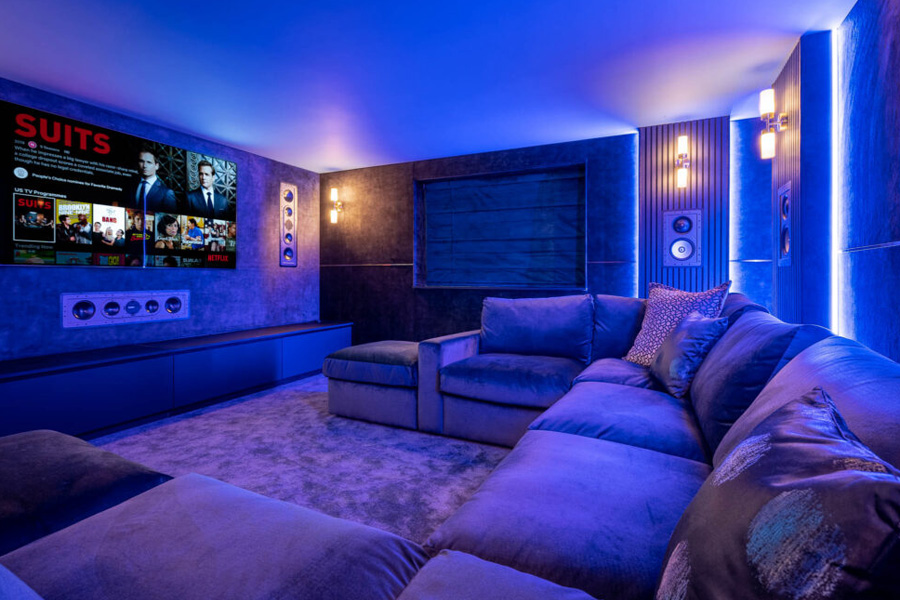
Whether the goal is a dedicated home cinema, seamless multi-room audio, intelligent lighting or a fully connected smart home, the best results rarely happen when these decisions are left until the decorating is almost finished.
Instead, they begin much earlier.
Renovation Is About More Than New Kitchens And Bathrooms
The idea of a dream renovation has changed dramatically over the last decade.
Homeowners are no longer focused solely on improving appearance.
They also want homes that work better.
Lighting that adapts throughout the day.
Reliable Wi-Fi in every room.
Entertainment that’s simple to control.
Heating that responds intelligently.
Security that can be monitored from anywhere.
Technology has become another layer of good home design rather than a collection of gadgets added afterwards.
Leeds Offers An Unusual Variety Of Homes
One reason every project feels different is the diversity of Leeds’ housing stock.
Luxury apartments overlooking the waterfront.
Edwardian villas.
Victorian terraces.
Contemporary executive homes.
Traditional Yorkshire stone properties on the outskirts of the city.
Each property creates different opportunities.
A modern extension may allow infrastructure to be incorporated from the outset.
A period property may require more sympathetic installation methods.
A large detached family home will have very different networking requirements to a city centre apartment.
Understanding those differences is where successful planning begins.
Early Decisions Create Better Results
Many renovation projects follow the same pattern.
Walls are plastered.
Floors are installed.
Decoration is complete.
Only then does somebody begin thinking about surround sound, networking or smart lighting.
At that point, options become limited.
Hidden cable routes disappear.
Equipment has nowhere sensible to live.
Wireless performance becomes compromised.
Retrofitting technology is certainly possible, but it rarely produces the same clean finish as planning everything before construction begins.
Thinking ahead usually creates better outcomes without significantly increasing the overall project budget.
Simplicity Is The Goal
One of the biggest misconceptions surrounding smart homes is that they make life more complicated.
The opposite should be true.
The best systems simplify everyday living.
Instead of juggling multiple remote controls, different mobile apps, and countless wall switches, everything works together.
Lighting adjusts automatically.
Music follows you from room to room.
Entertainment starts with a single touch.
Heating quietly manages itself.
Technology fades into the background.
People simply enjoy living in the house.
Character Homes Can Embrace Modern Living
Leeds contains numerous conservation areas where preserving architectural character is every bit as important as improving functionality. Conservation policies exist to protect the appearance and significance of these neighbourhoods while allowing appropriate change.
Fortunately, modern technology no longer needs to dominate a room.
Today’s installations are remarkably discreet.
Ceiling speakers almost disappear.
Equipment can be concealed within bespoke cabinetry.
Control panels replace rows of traditional switches.
Network hardware remains completely hidden.
This allows period properties to retain their original charm while benefiting from all the conveniences expected from contemporary living.
Strong Networks Are Becoming Essential
Few homeowners think about networking until something stops working.
The video buffers.
The wireless signal disappears upstairs.
Video calls become unreliable.
Smart devices disconnect.
These frustrations are usually symptoms of infrastructure rather than individual products.
Large properties, multiple floors and solid internal walls all place greater demands on domestic networks.
Careful planning creates reliable coverage throughout the property instead of relying on additional wireless boosters whenever problems appear.
One Size Never Fits Every Family
No two households use technology in quite the same way.
Some love entertaining.
Some want immersive movie nights.
Others prioritise remote working.
Families with young children often have completely different priorities to retired couples.
This is why integrated design remains so important.
Technology should always reflect how people actually use their homes rather than following the latest trends.
Buying Gadgets Isn’t The Same As Designing A System
The internet makes it incredibly easy to buy individual smart devices.
Wireless speakers.
Video doorbells.
Smart bulbs.
Voice assistants.
Motorised blinds.
Individually, each product can work well.
Collectively, they often create a confusing collection of disconnected systems requiring multiple apps, separate updates and different methods of control.
A properly designed smart home takes a different approach.
Everything works together through a single, intuitive interface, making the entire experience easier rather than more complicated.
Leeds Continues To Invest In Better Homes
Across the city, regeneration, restoration and investment continue to reshape neighbourhoods while preserving the qualities that make Leeds distinctive. Homeowners are increasingly improving both the efficiency and functionality of existing properties as expectations around comfort and connected living continue to grow.
Technology is becoming part of that evolution.
Not because it’s fashionable.
Because it genuinely improves how homes function every single day.
Good Planning Always Outlasts Good Products
Technology changes quickly.
The equipment available today will eventually be replaced by something newer.
What doesn’t change is the value of thoughtful planning.
Well-designed infrastructure.
Carefully considered cable routes.
Logical equipment locations.
Reliable networking.
These foundations continue adding value long after individual devices have been upgraded.
For homeowners planning an extension, renovation or new build, understanding the principles behind smart home and home cinema installation in Leeds can help ensure technology becomes part of the home’s overall design rather than something squeezed in afterwards.
Ultimately, the most successful homes aren’t remembered because they contain impressive gadgets.
They’re remembered because everything feels effortless.
That’s what thoughtful technology planning has always been about.